Tulalip Landfill
TULALIP INDIAN RESERVATION, Marysville, Washington, 98270
Listed1995
Contaminants:33
Overview
The Tulalip Landfill sits on North Ebey Island in the Snohomish River delta, on the Tulalip Tribes Reservation near Marysville, Washington. The landfill accepted an estimated three to four million tons of commercial and industrial waste between 1964 and 1979. Poor drainage allowed rainwater to soak through the inadequate soil cover, pushing contaminants into groundwater, surface water, and sediment. The EPA added the site to the National Priorities List (NPL) in 1995.
Contaminants at the site include heavy metals such as arsenic, chromium, mercury, copper, lead, nickel, and zinc. Pesticides including aldrin, dieldrin, heptachlor, lindane, and DDT compounds are also present. Polychlorinated biphenyls (PCBs) and polycyclic aromatic hydrocarbons (PAHs) such as benzo[a]pyrene complete the picture. These contaminants appear in leachate, soil, sediment, and surface water both at the landfill itself and in the surrounding wetland area.
Cleanup was organized into two operable units. The on-source unit, covering the landfill itself, received an engineered cap, slope stabilization, a bottom liner, revegetation, and an off-gas collection and treatment system. The off-source unit, covering the surrounding 160-acre wetland, relies on monitored natural recovery, institutional controls, and an engineered cap. The landfill cover was finished in 2000, and construction was fully complete by September 2000. The site was deleted from the NPL in September 2002, confirming that cleanup goals had been met.
The Tulalip Tribes manage ongoing monitoring and maintenance. Monthly gas emissions checks, quarterly leachate monitoring, annual settlement surveys, and aerial surveys every five years are all part of the long-term plan, which runs for at least 30 years. The site reached sitewide ready for anticipated reuse status in September 2021. The most recent five-year review was completed in May 2023, with the next review estimated for May through July 2028. Human exposure assessment currently sits at insufficient data status, meaning the response has begun but has not yet produced enough reliable information to confirm whether unacceptable human exposure pathways exist.
Community members can review site records at the Marysville Public Library, located at 6120 Grove Street in Marysville, Washington. Warning signs about fish and shellfish consumption are posted near the site, and fencing limits on-site access. The landfill is not open to the public. Residents on the reservation may dispose of waste at the Shelco Transfer Station, and Snohomish County residents can find other options through the county's website. For questions, the Remedial Project Manager is Adam Nichols at EPA, and Tony Reese serves as an additional contact with the Tulalip Tribes.
Contaminants of Concern
33 contaminants across 3 media types
- ARSENIC▾SoilLeachateSediment
- BENZO[A]PYRENESoilLeachate
- CHROMIUM▾SoilSediment
- CHRYSENESoilLeachate
- HEPTACHLOR EPOXIDESoilLeachate
- 4-(4-AMINO-3-CHLOROPHENYL)-2-CHLOROANILINELeachate
- 4-METHYLPHENOL (P-CRESOL)Sediment
- ALDRINLeachate
- ALUMINUMSoil
- AROCLOR 1016Leachate
- AROCLOR 1232Leachate
- AROCLOR 1242Soil
- AROCLOR 1254Leachate
- BENZO(B)FLUORANTHENELeachate
- BENZO(K)FLUORANTHENELeachate
- BENZO[A]ANTHRACENELeachate
- BERYLLIUMSoil
- BIS(2-ETHYLHEXYL)PHTHALATELeachate
- DIBENZO(A,H)ANTHRACENELeachate
- DIELDRINLeachate
- FLUORANTHENESediment
- GAMMA-CHLORDANELeachate
- GAMMA-HEXACHLOROCYCLOHEXANE (LINDANE)Leachate
- HEPTACHLORLeachate
- INDENO(1,2,3-CD)PYRENELeachate
- MANGANESE▾Soil
- MERCURYLeachate
- P,P'-DDDLeachate
- P,P'-DDELeachate
- P,P'-DDTLeachate
- PHENOLSediment
- PYRENESediment
- THALLIUMLeachate
Congressional Representation
Sen. Maria Cantwell

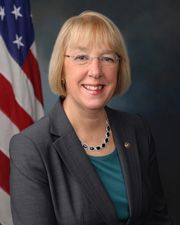
Sen. Patty Murray
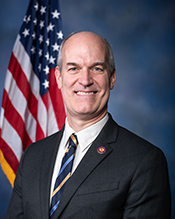
Rep. Rick Larsen