BFI Sanitary Landfill (Rockingham)
RTE 5, Rockingham, Vermont, 05101
Listed1989
Contaminants:17
Overview
The BFI Sanitary Landfill operated from 1968 to 1979 as an unlined disposal area in Rockingham, Vermont. It accepted industrial wastes including heavy metals, pesticides, and volatile organic compounds (VOCs). The site was licensed as a municipal hazardous waste landfill in 1983 and added to the National Priorities List (NPL) in 1989. The NPL is the EPA's roster of contaminated sites that require long-term cleanup under the federal Superfund program.
Groundwater at the site contains 17 contaminants of concern. These include metals such as arsenic, lead, chromium, and nickel, along with VOCs including benzene, vinyl chloride, trichloroethene, tetrachloroethene, dichloromethane, and xylene. Other contaminants found in groundwater include pentachlorophenol, methyl ethyl ketone, barium, manganese, antimony, and bis(2-ethylhexyl)phthalate.
Two major cleanup actions have been completed. A non-time-critical removal action, finished in 1995, included building a multilayer landfill cap, expanding the landfill gas extraction and treatment system, installing a shallow groundwater collection trench near Route 5, and putting institutional controls in place. A 1994 Record of Decision (ROD) selected natural attenuation of groundwater contamination combined with long-term monitoring. Physical construction of the full cleanup was completed on September 26, 1996. A 2014 Explanation of Significant Differences updated the cleanup timeline, projecting VOC cleanup levels to be reached by 2025 and bedrock groundwater restoration between 2050 and 2070. A 2015 vapor intrusion investigation found no pathway of concern. In August 2017, a new candlestick flare replaced the original enclosed flare, improving long-term gas migration control.
The EPA has determined that human exposure is under control and that groundwater migration is stabilized. The site achieved "sitewide ready for anticipated reuse" status on August 31, 2015. Long-term response actions remain ongoing under EPA oversight. Institutional controls restrict incompatible land uses such as residential development and protect cleanup components already in place. These controls will stay in effect as long as contamination and cleanup systems remain on the property. The most recent five-year review was completed on September 30, 2024.
Community members with questions about the site, planned activities, or applicable restrictions can contact the EPA's Community Involvement Coordinator or the Remedial Project Manager. The Vermont Agency of Natural Resources, Department of Environmental Conservation also serves as a state contact for this site.
Contaminants of Concern
17 contaminants across 1 media type
- 2-BUTANONE (METHYL ETHYL KETONE)Groundwater
- ANTIMONYGroundwater
- ARSENIC▾Groundwater
- BARIUMGroundwater
- BENZENE▾Groundwater
- BIS(2-CHLOROISOPROPYL) ETHERGroundwater
- BIS(2-ETHYLHEXYL)PHTHALATEGroundwater
- CHLOROETHENE (VINYL CHLORIDE)▾Groundwater
- CHROMIUM▾Groundwater
- DICHLOROMETHANE (METHYLENE CHLORIDE)Groundwater
- LEAD▾Groundwater
- MANGANESE▾Groundwater
- NICKEL▾Groundwater
- PENTACHLOROPHENOLGroundwater
- TETRACHLOROETHENE▾Groundwater
- TRICHLOROETHENE▾Groundwater
- XYLENE (MIXED ISOMERS)▾Groundwater
Congressional Representation
Sen. Bernard Sanders
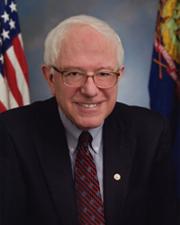
Sen. Peter Welch

Rep. Becca Balint