Publicker Industries Inc.
3223 S DELAWARE AVENUE, Philadelphia, Pennsylvania, 19148
Listed1989
Contaminants:6
Overview
Publicker Industries Inc. operated for more than seven decades along the Delaware River in Philadelphia, producing liquor and industrial alcohols from 1912 to 1985. The 40-acre facility left behind contaminated soil and groundwater containing volatile organic compounds (VOCs), heavy metals, polycyclic aromatic hydrocarbons (PAHs), polychlorinated biphenyls (PCBs), benzo[a]pyrene, lead, and asbestos. EPA added the site to the National Priorities List (NPL) in October 1989, a federal registry of the country's most serious hazardous waste sites.
Cleanup was organized into three operable units (OUs). OU-01 addressed site stabilization through demolition and disposal of hazardous materials, running from 1989 to 1991. OU-02 targeted asbestos in solid waste through offsite disposal, completed in 1995. OU-03 covered soil and groundwater contamination using onsite treatment, incineration, decontamination, monitoring, and institutional controls, finishing in 1997. EPA also conducted emergency removal actions from 1987 to 1988 to handle fire and explosion hazards left behind after a major fire destroyed part of the facility in 1987. A second fire in early 1992 briefly delayed progress. Three Records of Decision (RODs) guided cleanup choices, issued in 1989, 1991, and 1995.
EPA confirmed construction complete in December 1997 and deleted the site from the NPL on November 1, 2000. Human exposure is under control, with no unacceptable pathways for people to contact contaminants. Groundwater migration is also under control, with contamination stabilized and no unacceptable discharge to surface water. Monitoring continues to confirm that contaminated groundwater stays in its original area. The site was notably one of the first in the country where a Prospective Purchaser Agreement let new owners redevelop without liability for prior contamination. Today the property serves as a parking lot for a marine terminal and a facility for marine shipping container repair.
Institutional controls remain in place, including zoning restrictions that prevent residential use and requirements to notify authorities before any construction or excavation. The 2019 Five-Year Review confirmed the remedy continues to protect human health and the environment, and the most recent five-year review was completed in November 2024. Community members with questions can contact EPA's Community Involvement Coordinator or Remedial Project Manager directly. The Agency for Toxic Substances and Disease Registry (ATSDR), part of the Centers for Disease Control, can provide more detail on specific contaminants and health risk factors. Public documents and the Administrative Record are available at the U.S. EPA Region III office at 1600 John F. Kennedy Boulevard in Philadelphia by calling (215) 814-2396 to schedule an appointment.
Contaminants of Concern
6 contaminants across 4 media types
- BENZO[A]PYRENEOtherDebris
- LEAD▾OtherDebris
- POLYCHLORINATED BIPHENYLS (PCBs)OtherDebris
- ASBESTOSSolid Waste
- POLYCYCLIC AROMATIC HYDROCARBONS (PAHS)Soil
- VOCSoil
Congressional Representation
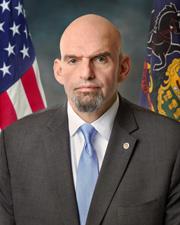
Sen. John Fetterman
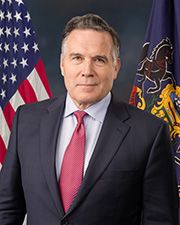
Sen. David McCormick
Rep. Mary Gay Scanlon