Industrial Excess Landfill
4MI S INTER 619 & CLEVELAND AVENUE, Uniontown, Ohio, 44685
Listed1986
Contaminants:25
Overview
The Industrial Excess Landfill is a 30-acre site in Uniontown, Stark County, Ohio. It accepted industrial waste from rubber manufacturers, hospitals, and other Akron-area sources from 1966 to 1980. An estimated 780,000 tons of solid waste and one million gallons of liquid waste were deposited there. EPA placed it on the National Priorities List in 1986, which identifies sites that warrant federal cleanup attention.
Contaminants include volatile organic compounds (VOCs) such as benzene, vinyl chloride, and tetrachloroethene in groundwater. Heavy metals including arsenic, lead, chromium, nickel, barium, and thallium are also present in groundwater. Polynuclear aromatic hydrocarbons (PAHs) such as benzo(a)pyrene have been found in soil and solid waste. Landfill gas contains 1,1-dichloroethene and 1,2-dichloroethane. The chemical 1,4-dioxane has been detected in private residential wells, with 35 of 110 wells testing positive as of April 2022.
Cleanup actions have included installing a methane gas venting system, removing 53 drums of industrial waste, placing air strippers at affected residences, expanding vegetative cover, and monitoring groundwater. Responsible parties conduct weekly methane monitoring and have expanded perimeter fencing where subsurface methane was detected nearby. About 40 homes are now connected to municipal water to reduce exposure to contaminated groundwater. On-site VOC contamination is decreasing in both number of detected compounds and concentration. In 2004, nearly 8,500 trees and shrubs were planted, invasive species were removed, and wildlife habitat boxes were installed. Construction of the overall cleanup was completed in May 2005, and an alternate water supply operable unit was completed in March 1994.
The site is not yet ready for its anticipated future use, meaning cleanup goals have not been fully achieved. Current data is insufficient to confirm whether human exposure is fully under control or whether groundwater migration is stabilized. Investigation is ongoing to define the extent of the 1,4-dioxane plume beyond site boundaries, and permanent monitoring wells are being installed. Zoning restrictions prevent residential development and other incompatible land uses. The site is estimated to reach readiness for anticipated reuse between January and March 2028. EPA most recently completed a five-year review on April 30, 2026.
Community members can get involved through EPA's five-year review process, which gives residents a chance to share information about site conditions and raise concerns directly with EPA. Site records are available for public review at the Hartsville Branch Library at 411 E. Maple St. in Hartville, Ohio, and at the Lake Township Clerk's Office at 12360 Market North in Hartville, Ohio.
Contaminants of Concern
25 contaminants across 4 media types
- 1,2-DICHLOROETHANEGroundwaterLandfill Gas
- BENZO(B)FLUORANTHENESoilSolid Waste
- BENZO(GHI)PERYLENESoilSolid Waste
- BENZO(K)FLUORANTHENESoilSolid Waste
- BENZO[A]ANTHRACENESoilSolid Waste
- BENZO[A]PYRENESoilSolid Waste
- CHRYSENESoilSolid Waste
- INDENO(1,2,3-CD)PYRENESoilSolid Waste
- 1,1-DICHLOROETHENELandfill Gas
- 1,4-DICHLOROBENZENEGroundwater
- ARSENIC▾Groundwater
- BARIUMGroundwater
- BENZENE▾Groundwater
- BIS(2-ETHYLHEXYL)PHTHALATEGroundwater
- CHLOROBENZENEGroundwater
- CHLOROETHANEGroundwater
- CHLOROETHENE (VINYL CHLORIDE)▾Groundwater
- CHROMIUM▾Groundwater
- CIS-1,2-DICHLOROETHENEGroundwater
- ETHYLBENZENEGroundwater
- LEAD▾Groundwater
- NICKEL▾Groundwater
- TETRACHLOROETHENE▾Groundwater
- THALLIUMGroundwater
- TOLUENE▾Groundwater
Congressional Representation
Sen. Jon Husted

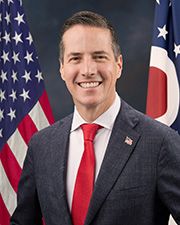
Sen. Bernie Moreno
Rep. Michael A. Rulli