Lea and West Second Street
LEA AND WEST SECOND STREET, Roswell, New Mexico, 88202
Listed2016
Contaminants:Not yet published
Overview
The Lea and West Second Street site sits in Roswell, New Mexico and covers roughly 1,064 acres spread across four separate areas along West Second Street, East Second Street, and nearby intersections. It was added to the National Priorities List on April 7, 2016, following an initial assessment in 2010. The site's contamination traces back to dry cleaning operations and leaking underground storage tanks at various locations in the area.
The main contaminants in soil and groundwater are chlorinated solvents, specifically perchloroethylene (PCE), trichloroethylene (TCE), cis-1,2-dichloroethene, and trans-1,2-dichloroethene. PCE moves quickly through sandy soils and, under oxygen-free underground conditions, breaks down into TCE and then into the dichloroethene compounds. The site also contains benzene, toluene, ethylbenzene, and xylene from fuel sources. These chemicals are volatile and can dissolve in groundwater or move into indoor air through a process called vapor intrusion.
The site is divided into four operable units (OUs). OU1 covers 156 acres near 510 and 514 West Second Street, where groundwater contamination was found in 2006. OU2 spans 509 acres near 507 East Second Street and is linked to a private sewer line from former dry cleaners. OU3 covers 276 acres near West Second and Montana Avenue and involves two separate PCE releases. OU4 covers 123 acres near South Virginia Avenue and East Alameda Street and involves both dry cleaning and storage tank contamination. All four units are in the remedial investigation and feasibility study phase. Phase I ended in April or May 2021, and Phase II began in September 2021. Annual vapor intrusion monitoring is conducted at OU1, OU2, and OU3. As of March 2025, EPA began testing two treatment technologies on the 500 block of West 2nd Street: Soil Vapor Extraction, to clean contaminated soil and reduce indoor air risks, and Ozone Air Sparging, to treat saturated soil and groundwater. These studies are expected to run through November 2025. A remedy selection for OU2 is estimated between February and April 2028. Human exposure pathways and groundwater migration both have insufficient data to determine if they are under control.
Community members can get involved through EPA's Community Involvement Plan, which is being developed to guide outreach and information sharing. Public documents are available at the Roswell Public Library at 301 North Pennsylvania Avenue and through EPA's online records system. The Phase I Remedial Investigation Report is available for download. Questions can be directed to EPA's Community Involvement Coordinator or Remedial Project Manager.
Contaminants of Concern
The EPA has not published an official contaminant record for this site.
Congressional Representation
Sen. Martin Heinrich

Sen. Ben Ray Luján
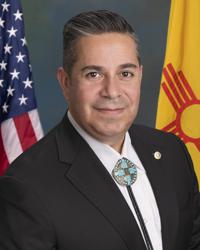
Rep. Teresa Leger Fernandez
