Bee Cee Manufacturing Co.
MALDEN INDUSTRIAL PARK, Malden, Missouri, 63863
Listed1986
Contaminants:6
Overview
Bee Cee Manufacturing Co. operated as a metal plating facility in Malden, Missouri from 1964 to 1983. Workers used open vats to clean and etch aluminum moldings, and wastewater flowed directly onto soil north of the building. This contaminated the soil and groundwater with hexavalent chromium and total chromium. EPA added the site to the National Priorities List in June 1986, which formally flagged it for cleanup under the federal Superfund program.
The contaminants of concern found in groundwater and soil include arsenic, chromium, hexavalent chromium compounds, chromium(VI), lead, and zinc. Action levels for soil were set at 2,000 parts per million for total chromium and 180 parts per million for hexavalent chromium. In August 1992, EPA removed 356 tons of contaminated surface soil, took out five vats and the building, and uncovered a gravel pit that had absorbed wastewater for years.
EPA selected the long-term cleanup remedy in 1997. It relies on monitored natural attenuation, meaning contaminants are expected to decrease on their own over time while monitoring tracks progress. Five groundwater monitoring wells were installed, and active remedial work ran from 1999 to 2001. In 2010, EPA modified the remedy to focus on institutional controls and monitoring. Those controls prohibit new drinking water wells and restrict land use to industrial and commercial purposes until cleanup is complete. The Missouri Department of Natural Resources now leads day-to-day site management, with EPA in a support role.
The most recent five-year review, completed June 17, 2024, confirmed that current response actions protect public health and the environment. The contaminated groundwater plume is not migrating beyond its original area, and surface soil poses no threat to people. Hexavalent chromium levels in groundwater are decreasing but remain above cleanup goals. Annual groundwater sampling continues, with the most recent event on June 24, 2025. The site has not yet been deleted from the National Priorities List.
Community members who want to understand the cleanup can contact the EPA Community Involvement Coordinator or the Remedial Project Manager. Free technical help is available through the Technical Assistance Services for Communities program, which connects community members with independent experts. Community groups can also apply for a Technical Assistance Grant of up to $50,000 to hire their own technical advisors. Public records are available at the Dunklin County Library at 1203 Stokelan in Malden, Missouri, reachable at 573-276-3674.
Contaminants of Concern
6 contaminants across 2 media types
- ARSENIC▾Groundwater
- CHROMIUM▾Groundwater
- CHROMIUM (HEXAVALENT COMPOUNDS)▾Soil
- CHROMIUM(VI)▾Groundwater
- LEAD▾Groundwater
- ZINC▾Groundwater
Congressional Representation
Sen. Josh Hawley

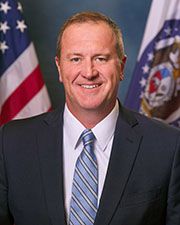
Sen. Eric Schmitt
Rep. Jason Smith