Washington County Lead District - Furnace Creek
2 MI. N OF INT. OF BIG RIVER & HWY 21, Caledonia, Missouri, 63631
Listed2011
Contaminants:6
Overview
The Washington County Lead District - Furnace Creek site covers roughly 533 square miles around Caledonia, Missouri. Lead mining there dates to 1799, and barite mining expanded sharply after 1926. More than 1,000 historical mining and milling sites left behind arsenic, barium, cadmium, chromium(VI), cobalt, and lead in soil and groundwater. The site was added to the National Priorities List in March 2011 and is still under active cleanup.
Contamination affects soil at more than 320 residential properties and private wells at roughly 49 homes. Some residents unknowingly used mine waste for driveways or as sandbox sand. Human exposure is not currently under control, meaning unsafe levels have been detected and people could reasonably be exposed. Groundwater migration status is uncertain due to insufficient data.
The EPA split the site into five operable units covering soil, groundwater, mine waste, surface water and sediment, and railroad lines. Soil cleanup started with a 2017 Record of Decision that called for excavation, offsite disposal, solidification and stabilization, revegetation, and topsoil replacement. Residential soil removal began in 2008, a remedial program launched in 2019, and contractor EA Engineering Science and Technology Inc. began excavating residential properties in spring 2025. About 2,812 properties still need sampling, and roughly one in four tested properties qualify for soil cleanup. A 2022 Record of Decision addresses groundwater by installing point-of-use filters under kitchen sinks for qualifying residents. Remedial action on groundwater began in September 2023 and is estimated to run through mid-2028. Mine waste, surface water and sediment, and railroad line studies are still underway, with no decision documents yet for those units. The most recent five-year review was completed in March 2024.
Community members can get their yards and private wells tested for free through the EPA. Contractor EA Engineering may reach out by phone, door knocking, or mail to arrange access for cleanup work. Residents who want independent help understanding technical documents can use the Technical Assistance Services for Communities program, which provides scientists and engineers at no cost. For questions, contact the EPA Community Involvement Coordinator, Shaylee Borcsani, at (816) 885-2043 or borcsani.shaylee@epa.gov.
Contaminants of Concern
6 contaminants across 2 media types
- ARSENIC▾SoilGroundwater
- BARIUMSoilGroundwater
- CADMIUM▾SoilGroundwater
- LEAD▾SoilGroundwater
- CHROMIUM(VI)▾Soil
- COBALTSoil
Congressional Representation
Sen. Josh Hawley

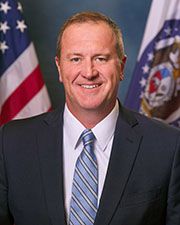
Sen. Eric Schmitt
Rep. Ann Wagner