Minot Landfill
Burdick Expressway W and US Highway 2 and 52 W, Minot, North Dakota, 58701
Listed1989
Contaminants:44
Overview
The Minot Landfill covers 26 acres in Minot, North Dakota. It operated from 1961 to October 1971, accepting municipal and industrial wastes including oil drums, spent battery casings, calcium carbide, and lime sludge. Those materials contaminated groundwater, surface water, soil, sediment, and air. EPA added the site to the National Priorities List in March 1989 and deleted it in April 1997 after cleanup was finished.
More than 100 chemical substances have been identified as contaminants of concern. Metals found at the site include arsenic, lead, chromium, nickel, copper, zinc, barium, cobalt, and vanadium. Volatile organic compounds (VOCs) such as benzene, toluene, xylene, vinyl chloride, tetrachloroethene, and dichloroethene appear in groundwater, soil, sediment, landfill gas, and surface water. Polycyclic aromatic hydrocarbons (PAHs), phthalates, and Aroclor 1254, a type of polychlorinated biphenyl (PCB), are also present across multiple media.
The long-term cleanup, completed in 1996, consolidated contaminated soil under a landfill cap, installed a passive gravity drain to manage leachate, added passive venting for landfill gas, set up groundwater monitoring, and put institutional controls in place. Earlier removal actions in 1989 and 1990 addressed urgent threats by fencing the perimeter, adding erosion controls, and repairing discharge systems. In 1996, EPA changed the gas collection system from active to passive operation, and a 2022 document recorded additional remedy changes and updates to institutional controls.
The most recent five-year review, completed in July 2021, found that the cleanup continues to protect human health and the environment in the short term. Human exposure is currently under control. However, EPA has insufficient data to confirm whether contaminated groundwater movement is stabilized, so the site has not yet achieved ready-for-anticipated-reuse status. Two actions were identified for long-term protection: the City of Minot should determine the source of elevated vinyl chloride in one monitoring well, and detection limits for chromium analysis in groundwater samples need to improve. The next five-year review is expected between July and September 2026. A proposed modification to the site's 1995 Consent Decree would allow the remediated land to be used for recreational purposes, including an 18-hole disc golf course and trails. A public comment period on that proposal runs from April 30 to June 1, 2026.
Community members can share input during the ongoing sixth five-year review. Site records are available at the Minot Public Library in Minot or at the EPA Superfund Records Center in Denver, Colorado. Copies of administrative documents can be requested by calling 303-312-7273 or toll-free at 800-227-8917, extension 312-7273. Direct questions can go to EPA's Community Involvement Coordinator or Remedial Project Manager, or to the North Dakota Department of Environmental Quality.
Contaminants of Concern
44 contaminants across 6 media types
- CHLOROETHENE (VINYL CHLORIDE)▾SoilSedimentGroundwaterSolid WasteLandfill GasSurface Water
- TOLUENE▾SoilSedimentGroundwaterSolid WasteLandfill GasSurface Water
- ACETONESoilSedimentGroundwaterSolid WasteSurface Water
- ARSENIC▾SoilSedimentGroundwaterSolid WasteSurface Water
- BARIUMSoilSedimentGroundwaterSolid WasteSurface Water
- BENZENE▾SoilSedimentGroundwaterSolid WasteLandfill Gas
- BENZO[A]ANTHRACENESoilSedimentGroundwaterSolid WasteSurface Water
- BENZO[A]PYRENESoilSedimentGroundwaterSolid WasteSurface Water
- BENZOIC ACIDSoilSedimentGroundwaterSolid WasteSurface Water
- BROMODICHLOROMETHANESoilSedimentGroundwaterSolid WasteSurface Water
- BROMOMETHANESoilSedimentGroundwaterSolid WasteSurface Water
- BUTYL BENZYL PHTHALATESoilSedimentGroundwaterSolid WasteSurface Water
- CHROMIUM▾SoilSedimentGroundwaterSolid WasteSurface Water
- COBALTSoilSedimentGroundwaterSolid WasteSurface Water
- COPPER▾SoilSedimentGroundwaterSolid WasteSurface Water
- DI-N-OCTYL PHTHALATESoilSedimentGroundwaterSolid WasteSurface Water
- DIBUTYL PHTHALATESoilSedimentGroundwaterSolid WasteSurface Water
- DICHLOROMETHANE (METHYLENE CHLORIDE)SoilSedimentGroundwaterSolid WasteSurface Water
- DIETHYL PHTHALATESoilSedimentGroundwaterSolid WasteSurface Water
- INDENO(1,2,3-CD)PYRENESoilSedimentGroundwaterSolid WasteSurface Water
- LEAD▾SoilSedimentGroundwaterSolid WasteSurface Water
- NAPHTHALENESoilSedimentGroundwaterSolid WasteSurface Water
- NICKEL▾SoilSedimentGroundwaterSolid WasteSurface Water
- PHENANTHRENESoilSedimentGroundwaterSolid WasteSurface Water
- PHENOLSoilSedimentGroundwaterSolid WasteSurface Water
- TETRACHLOROETHENE▾SoilSedimentGroundwaterSolid WasteSurface Water
- TRANS-1,2-DICHLOROETHENESoilSedimentGroundwaterSolid WasteSurface Water
- VANADIUMSoilSedimentGroundwaterSolid WasteSurface Water
- ZINC▾SoilSedimentGroundwaterSolid WasteSurface Water
- 2-METHYLNAPHTHALENESoilSedimentGroundwaterSurface Water
- 4-METHYLPHENOL (P-CRESOL)SoilSedimentGroundwaterSurface Water
- AROCLOR 1254SoilSedimentSolid WasteSurface Water
- BIS(2-ETHYLHEXYL)PHTHALATESoilSedimentSolid WasteSurface Water
- ETHYLBENZENESoilSedimentGroundwaterLandfill Gas
- XYLENE (MIXED ISOMERS)▾SoilSedimentGroundwaterLandfill Gas
- 1,2-DICHLOROETHENE (CIS AND TRANS MIXTURE)Groundwater
- 1,2,4-TRIMETHYLBENZENELandfill Gas
- 1,3,5-TRIMETHYLBENZENELandfill Gas
- 2-BUTANONE (METHYL ETHYL KETONE)Surface Water
- 2-HEXANONESurface Water
- 4-METHYL-2-PENTANONE (METHYL ISOBUTYL KETONE)Surface Water
- BIS(2-ETHYLHEXYL) ADIPATEGroundwater
- CHLOROBENZENELandfill Gas
- DICHLORODIFLUOROMETHANELandfill Gas
Congressional Representation
Sen. Kevin Cramer

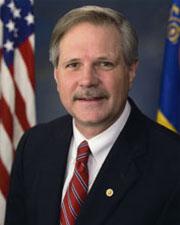
Sen. John Hoeven
Rep. Julie Fedorchak