Lorentz Barrel & Drum Co.
1515 S 10TH ST, San Jose, California, 95112
Listed1989
Contaminants:23
Overview
A drum reconditioning and recycling facility operated at the corner of Alma Avenue and 10th Street in San Jose from 1947 to 1987, processing more than 2 million drums that held solvents, acids, and caustic chemicals. Improper waste handling released hazardous substances into soil, groundwater, and a nearby creek. EPA added the site to the National Priorities List (NPL) in 1989. The 7-acre property is now partly used for auto dealer parking and by a paper recycling company, and the site reached "sitewide ready for anticipated reuse" status in 2013.
EPA identified 27 contaminants of concern across groundwater, soil, soil gas, and on-site buildings. Groundwater contamination includes chlorinated solvents such as 1,1,1-trichloroethane, 1,2-dichloroethane, and vinyl chloride, along with benzene, nickel, chloroform, and polychlorinated biphenyls (PCBs). Soil contamination includes pesticides such as aldrin, chlordane, dieldrin, and DDT compounds, plus arsenic, chromium, lead, and 2,3,7,8-tetrachlorodibenzo-p-dioxin (TCDD). Volatile organic compounds (VOCs) were found in soil gas as well.
Much of the cleanup is done. Contaminated soils are covered by an asphalt cap and surrounded by fencing, eliminating complete exposure pathways through soil. Groundwater contamination is limited to a shallow zone not used for drinking water in the South Bay area. A groundwater pump-and-treat system, operated by the potentially responsible party group, contains shallow groundwater contamination. Annual groundwater sampling has confirmed that contamination has not migrated into the nearby residential neighborhood. EPA has determined that human exposure is under control and construction is complete. However, EPA lists groundwater migration control as having insufficient data, meaning it cannot yet confirm whether the contaminated groundwater plume is fully stabilized.
Work continues on two operable units (OUs). For OU 01, covering site soils and soil vapor extraction, EPA issued a proposed cleanup plan in 2025 to address remaining source area soil contamination. The public comment period has closed, and EPA is preparing a Record of Decision Amendment. Some contamination remains in a clay layer that is slowly releasing, or "back diffusing," chemicals back into groundwater. Remedial design work for OU 01 is estimated to run through 2028. For OU 02, addressing shallow groundwater, site investigations and cleanup planning are ongoing. After the source area soil is cleaned up, treating the remaining groundwater plume may take additional time before the site can be closed out. EPA completed its sixth Five-Year Review in September 2025, finding the remedy currently short-term protective.
Community members can review site documents at the Tully Community Branch Library in San Jose or at EPA's Regional Records Center in San Francisco. For questions, contact the EPA Community Involvement Coordinator or the Remedial Project Manager.
Contaminants of Concern
23 contaminants across 4 media types
- POLYCHLORINATED BIPHENYLS (PCBs)SoilGroundwaterBuildings/Structures
- VOCSoilSoil Gas
- 1,1-DICHLOROETHANEGroundwater
- 1,1,1-TRICHLOROETHANEGroundwater
- 1,2-DICHLOROETHANEGroundwater
- 1,2-DICHLOROPROPANEGroundwater
- 2,3,7,8-TETRACHLORODIBENZO-p-DIOXIN (TCDD)Soil
- ALDRINSoil
- ARSENIC▾Soil
- BENZENE▾Groundwater
- CHLORDANESoil
- CHLOROETHENE (VINYL CHLORIDE)▾Groundwater
- CHLOROFORMGroundwater
- CHROMIUM▾Soil
- DIELDRINSoil
- ENDOSULFAN (I OR II)Soil
- LEAD▾Soil
- NICKEL▾Groundwater
- P,P'-DDDSoil
- P,P'-DDESoil
- P,P'-DDTSoil
- PENTACHLOROETHANEGroundwater
- PESTICIDESBuildings/Structures
Congressional Representation
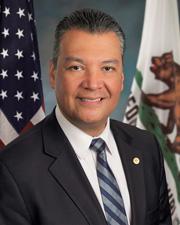
Sen. Alex Padilla
Sen. Adam B. Schiff

Rep. Zoe Lofgren