Jet Propulsion Laboratory (NASA)
4800 OAK GROVE DR, Pasadena, California, 91109
Federal FacilityListed1992
Contaminants:18
Overview
NASA's Jet Propulsion Laboratory, a 176-acre research facility in Pasadena, California, was added to the National Priorities List in October 1992 after past aeronautics and space research work contaminated groundwater and soil. The California Institute of Technology operates the lab under a NASA contract. As the site owner and operator, NASA is responsible for cleanup, with the EPA serving as the lead regulatory agency under a Federal Facilities Agreement. Cleanup is organized into four operable units covering onsite groundwater, offsite groundwater, and soils.
The site has 32 identified contaminants across multiple areas. Groundwater contains trichloroethene, tetrachloroethene, carbon tetrachloride, chloroform, chromium (VI), nitrate, perchlorate, and several other chlorinated compounds. Soils contain arsenic, PCB mixtures known as aroclors, and several phthalate compounds. Air contamination includes trichloroethene, carbon tetrachloride, and 1,1,2-trichloro-1,2,2-trifluoroethane.
Three groundwater extraction and treatment systems address contamination both on and off the site. Onsite systems use a fluidized bed reactor for perchlorate and granulated activated carbon (GAC) for volatile organic compounds (VOCs). Two offsite systems, serving the Lincoln Avenue and Monk Hill wells, use ion-exchange technology for perchlorate and GAC for VOCs. All treated water meets federal and state drinking water standards. Soil contamination was addressed through soil vapor extraction, with remedial action completed in January 2007. Records of Decision for both groundwater units were updated in February 2018 to add institutional controls and refine treatment approaches.
Physical construction of the cleanup finished in September 2020, and the site reached sitewide ready-for-anticipated-reuse status that same month. Human exposure is under control, meaning no unacceptable pathways exist for people to contact contamination. Groundwater migration is also under control, with no unacceptable discharge to surface water. A five-year review was completed in June 2022. Operation and maintenance on the groundwater units is expected to continue through late 2025 or 2026. The site has not yet been deleted from the National Priorities List.
Community members with questions can contact the EPA team directly. Copies of the Administrative Record are available through NASA or the site's Public Information Repository.
Contaminants of Concern
18 contaminants across 3 media types
- 1,1-DICHLOROETHENEAirGroundwater
- ARSENIC▾SoilGroundwater
- CARBON TETRACHLORIDEAirGroundwater
- CHROMIUM(VI)▾SoilGroundwater
- TRICHLOROETHENE▾AirGroundwater
- 1,1,2-TRICHLORO-1,2,2-TRIFLUOROETHANEAir
- 1,2-DICHLOROETHANEGroundwater
- AROCLOR 1232Soil
- AROCLOR 1254Soil
- AROCLOR 1260Soil
- BIS(2-ETHYLHEXYL)PHTHALATESoil
- BROMODICHLOROMETHANEGroundwater
- BUTYL BENZYL PHTHALATESoil
- CHLOROFORMGroundwater
- DIBUTYL PHTHALATESoil
- NITRATEGroundwater
- PERCHLORATEGroundwater
- TETRACHLOROETHENE▾Groundwater
Congressional Representation
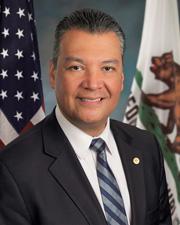
Sen. Alex Padilla
Sen. Adam B. Schiff

Rep. Judy Chu